Monday, July 10, 2017

Current Reads & Reviews: YA Realistic Fiction

Ng, Celeste. Everything I Never Told You. New York: The Penguin Press, 2014. Print. ISBN: 159420571X

SummaryThis is a heart wrenching story of a sixteen-year-old girl named Lydia and how she came to be found at the bottom of her neighborhood lake. Her family is left wondering what happened, what went wrong… A tragic story where those left behind struggle to come to terms with the part they may have played in Lydia’s death. A modern day Ordinary People yet still set in 1977. 

Analysis: Everything I Never Told You is a heart wrenching story as you follow each of the family’s thoughts as they work through the process of losing a family member. Set in 1977 Ohio in a small town called Middlewood, the story opens up to a Chinese American family noticing that their sixteen year old daughter is missing. This brings some mystery to the story as the reader is left trying to figure out what actually happened to Lydia Lee, what went wrong.
            Ng takes a different approach here. Typically the reader will learn about the victim, hearing from her and her close friends, yet Ng focuses more on the past of each of the parents. This is great as it shows young adults a different perspective giving them an understanding that parents had or have lives too… Dreams that they themselves want or wanted to fulfill, and how that makes them want to see their children reach the same dreams as well as the toll that takes on the child. The reader also hears from the siblings and sees how they are dealing with the loss through their eyes as well. Hearing from each family member one sees how they all try to figure out when it was their world began to tilt in the wrong direction.
            Ng weaves a story together beautifully. The reader feels the angst and frustration of growing up Chinese American and the prejudices that comes with that back in 1977. While this very well could be an adult novel, older young adults will get lost in the mystery of what happened to Lydia.

Activity: The students could do a comparison study review of the modern day novel Everything I Never Told You to the classic novel Ordinary People. After reading both, students will complete plot maps for both stories, then choose one character from both novels and comparing the character development of the two.

Related Resources:  Two novels that are related to the theme of coming to terms with loss in Everything I Never Told You are:

Asher, Jay. 13 Reasons Why. London: Penguin, 2017. Print. 
Thirteen Reasons Why is a modern day story about a girl that commits suicide and the thirteen reasons why she ends her life. It is a story of how the people who knew her struggle to understand and cope with this tragedy.

Guest, Judith. Ordinary People. NY, NY: Penguin, 2015. Print
Ordinary People living ordinary lives enduring life's ordinary issues and tragedies but struggling along the while learning to heal. A father who cares too much, a mother that doesn't care enough, and son just trying to figure out how to exist between the two.

Scholarly Reviews:
Kirkus Reviews 06/01/2014; Booklist 05/15/2014; Library Journal 05/01/2014; Publishers Weekly 04/14/2014

Ng, Celeste. Everything I Never Told You. Penguin Group USA, 2014. EBSCOhost, ezp.twu.edu/login?url=http://ezproxy.twu.edu:2060/login.aspx?direct=true&db=kdh&AN=BK0013949093&site=ehost-live.


Tuesday, July 4, 2017

Current Reads & Reviews: A Culturally Diverse Novel

The Absolutely True Diary of a Part-Time Indian
Alexie, Sherman, and Ellen Forney. The Absolutely True Diary of a Part-Time Indian. Boston, MA: Little Brown, 2007. Print. ISBN: 0316013684 

Summary: Meet Junior, a Native American living on the Spokane Reservation with the rest of his alcoholic family, who wants more out of life. Leaving the “rez” to attend an all-white high school, Junior is torn between two places… his heritage and his future. This is a story about hard choices, acceptance, grief, and perseverance.

Analysis: A multicultural diverse novel, The Absolutely True Diary of a Part-Time Indian shows the reader a glimpse of what it is like to be an American Indian today, and the effects historical oppression has had on their lives. The inequalities and injustices between white people and American Indians is astounding.
Author Sherman Alexie grew up on the Spokane Indian Reservation in Washington State, which is the setting in the novel giving the reader an honest look inside life there. “On the rez, you know every kid’s father, mother, grandparents, dog, cat, and shoe size. I mean, yeah, Indians are screwed up, but we’re really close to each other. We KNOW each other. Everybody know everybody” (Alexie 153). The main character, Junior, is a young lad with high hopes. He attends his school on the reservation and is so disappointed in the quality of education provided he decides to seek an education elsewhere. Now Junior has never truly fit in at home.
Being ill at a very young age, Junior is bullied by his own people quite a lot all while also dealing with his father’s alcoholism. He is viewed by his people as rejecting his own culture to live in a white people world. He loses his best friend along the way and has to deal with his own guilt at leaving his behind. This is a story of a struggle to fit in to two very different worlds. Junior tries hard to be a part of both while still seeking a better life for himself. “… some Indians think you have to act white to make your life better. Some Indians think you become white if you try to make your life better, if you become successful” (Alexie 131).
Ellen Forney’s quirky illustrations shown as Junior’s own personal cartoons, help tell the story while also making it funny along the way. “I draw because words are too unpredictable. I draw because words are too limited. If you speak and write in English, or Spanish, or Chinese, or any other language, then only a certain percentage of human beings will get your meaning. But when you draw a picture, everybody can understand it” (Alexie 5).
            “The quality of a man’s life is in direct proportion to his commitment to excellence, regardless of his chosen field of endeavor” (Alexie 148). This story will appeal to middle school age students on up to adults. There is some sexual innuendos and language but it is done in quite a humorous way… all natural thoughts for a high school age young man. The Absolutely True Diary of a Part-Time Indian should be on the main display at school libraries promoting cultural diversity awareness. It is an excellent look into the lives of Native Americans and their continuous struggle in an unfair world.

Activity: Before reading, students will conduct research on the Spokane tribe, leading them to the author, Spokane native Sherman Alexie. Students will learn about the tribe’s culture, their location, history, and present life. After completing their research, the students will work in groups to come up with three predictions regarding the novel based off the summary and what they have learned thus far.

Related Resources: To expand on multicultural themes and characters who are outsiders that love to play basketball and are looking for their place in life, below are two novels that come highly acclaimed:

Peña, Matt De la. Mexican Whiteboy. New York: Delacorte Press, 2008. Print.
In Mexican Whiteboy by Matt De La Pena, Danny, being half Hispanic, is completely out of his element no matter if he is at home with his fellow Hispanic family or when he is away at private school surrounded by white people.

Walker, Brian F. Black Boy White School. New York: HarperTeen, 2012. Print.
In Black Boy White School by Anthony Jones, a young man growing up in poverty just like his family before him, receives a scholarship to an elite prep school. He leaves in search of something better but will he be accepted there and will he be welcome back home if he succeeds?

Scholarly Review:
School Library Journal 09/01/2007; Publishers Weekly 08/20/2007; Booklist 08/01/2007; Kirkus Reviews, 07/15/2007

Alexie, Sherman and Ellen Forney. The Absolutely True Diary of a Part-Time Indian. Little, Brown,   2007. EBSCOhost, ezp.twu.edu/login?url=http://ezproxy.twu.edu:2060/login.aspx?         direct=true&db=kdh&AN=BK0007245533&site=ehost-live&scope=site.

Tuesday, June 27, 2017

Current Reads & Reviews: A 2015 Challenged Book

17237214
Levithan, David. Two Boys Kissing. New York: Ember, 2013. Print. ISBN: 0307931900 

Summary: Meet Harry and Craig, Ryan and Avery, Neil and Peter, Tariq, and Cooper, all young men dealing with homosexuality in their very own ways. Follow each of their stories, their sorrows and triumphs as we see them struggle with society’s views.

Analysis: Two Boys Kissing is a great novel for the young lad trying to come to terms with his sexuality. Meant for grades 7th through 9th, Levithan does a great job at showing the parallels of society back in the 1990s versus today. The story is told in short snippets where the reader is introduced to several different lives of young men all dealing with their homosexuality. We meet eight gentlemen, each with their very own story, their own inner struggles, as they confront their homosexuality in today’s society. Some deal with the acceptance from their parents – some are completely accepting while others shun their own children. “Some of our parents were always on our side. Some of our parents chose to banish us rather than see us for who we were. And some of our parents, when they found out we were sick, stopped being dragons and became dragonslayers instead. Sometimes that’s what it takes – the final battle. But it should take much, much less than that.” (Levithan 84). While others are dealing with accepting themselves, or finding acceptance from their peers.
            The reader also hears from the generation of homosexuals that come before them. A generation of solitude, a generation that had to hide their true selves, a generation of death – whether by suicide or HIV. Told in first person plural where the “we” and “us” of the 1990s is conveyed. “Two boys kissing. You know what this means. For us, it was a secret gesture. Secret because we were afraid. Secret because we were ashamed. Secret because it was a story no one was telling.” (Levithan 61). Levithan is brilliant in showing these parallels. How society has grown since then and also how far we still have to go for complete acceptance from parents, peers, even one’s own self. How, no matter the year, their wants and needs are still the same.
            A story of acceptance. A story of survival. A story we should all read, no matter your age, so we can begin to understand homosexuals and their inner struggles. Told from each of the character’s perspective, Levithan reels you into the lives of his characters, leaving the reader with a complete picture of their struggles and their rightful place in society. This is a book that all libraries should display as a must read!

Activity: Before reading, students could research and explore Guinness World Records for a record they would be passionate about beating. Then the students will write a detailed outline of their plan to break that record. Then the students will share their plans in a gallery walk. Some students just might go and try to break some records.

Related Resources:  Below are two books that deal with being a homosexual in today’s society.

Levithan, David. Boy Meets Boy. Westminster, MD: Alfred A. Knopf, 2005. Print.
Boy Meets Boy is a story about relationships, the good times along with the bad times, and somethings losing the one you love.

Trumble, J. H. Just Between Us. E Rutherford, NJ: Kensington Pub Corp, 2013. Print.
Just between us is story of a young man dealing with being diagnosed HIV positive, and how he will confront this being in a newfound relationship. Secluding himself from that love and close relationships, this is a story of coming to terms with the hand you’ve been dealt and the people who will stick by you.

Scholarly Reviews:
School Library Journal 09/01/2013; Booklist 08/01/2013; Publisher’s Weekly 06/03/2013

Levithan, David. Two Boys Kissing. Random House Children’s Books, 2013. EBSCOhost,
ezp.twu.edu/login?url=http://ezproxy.twu.edu:2060/login.aspx?direct=true&db=kdh&AN=BK0012690549&site=ehost-live&scope=site.

Tuesday, June 20, 2017

Current YA Reads & Reviews: Michael L. Printz Award Winner

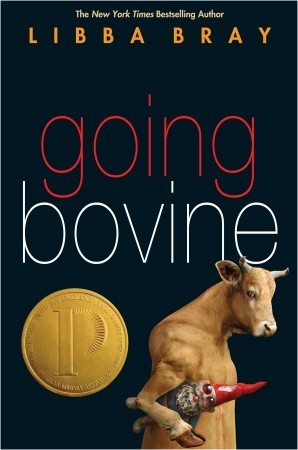
Going Bovine
Bray, Libba. Going Bovine. New York: Delacorte, 2009. Print. ISBN: 0385733976

Summary: Cameron, a 16 year-old who seems to exist but isn’t actually doing any living, is contracted with a disease that will ultimately be his doom. Embark on his adventure along with a dwarf and a garden gnome. This is an entertaining story of learning how to live no matter the circumstances, even if they are dire.

Analysis: Libba Bray does an excellent job painting the picture for her reader. It is as if she wants to show the reader how the story would play out if it was on the movie screen. Each scene has an angle, showing she is the director in her own created story. “The camera angle goes wider and wider till it’s so out of focus we’re nothing but a blob of color on the screen” (Bray 59). The reader visualizes this as it happens, projecting the movie experience. Once Cameron is emitted to the hospital, the rest of the story plays metaphorically as if he is finally living, but through a dream.
            Bray’s style is hilarious, laugh out loud funny. She does a fantastic job conveying the culture as their adventure starts off in Texas then traveling through many different states, leaving readers hearing the different dialects/accents in their mind. New Orleans was portrayed quite well you feel as if you actually just visited there. The addition of Norse mythology provided by the gnome, Balder, was way cool. Boldface headings start each chapter, adding an element of foreshadowing. These headings are quirky and funny, leading the reader wondering what Cameron and his entourage will get themselves into next. Cameron fights for his life by fighting the disease within him, showing the reader he just might actually have a passion for life after all. His dreams during his comatose state represent this fight within him as he learns some life lessons along the way.
            A serendipitous story through and through. There were “signs” for Cameron about life and choices before looking for signs was even mentioned in the story. Characters the reader meets early on will play into Cameron’s fate later, leaving the reader with the message that everything is connected. A fight between life and death is presented by Bray in such a cool way. Listed for high school age students, however, the middle school students would enjoy it at well. There is some foul language, and sexual innuendos, but ultimately pretty clean. Bray’s writing, with her quirkiness and sly tie-ins, leaves the reader constantly entertained with a great message that to exist is one thing, but learning to love is to have actually lived. This is a story about finding one’s passion in life.

Activity: As Cameron embarks on his journey of survival and saving the world, students will create a digital photo story or video that represents the key points as well as the main themes that symbolize Cameron’s fight for his life as his adventure progresses throughout the story.

Related Resources: 
Andrews, Jesse. Me and Earl and the Dying Girl: A Novel. New York: Amulet, 2015. Print.
Me and Earl and the Dying Girl is a story about Greg Gaines, a young lad that avoids anything in life, skirting by, lacking passion for anything. Quite similar to Cameron in Going Bovine. Like Cameron, Greg embarks on a journey that just may help open his eyes and his heart to finding their meaning in this life dealing with the approach of death along the way.

Bray, Libba. Beauty Queens. Jefferson City, MO: Scholastic Press, 2011. Print.
Beauty Queens is a crazy fun quirky story where a plane full of beauty pageant contests crashes on a remote island. The young ladies all have to figure out how to survive, sometimes fighting for their lives. Bray’s writing is so entertaining you feel like you are watching a television show along with the commercials.  Laugh out loud funny, much like her writing style in Going Bovine.

Scholarly Reviews:
School Library Journal, 09/01/2009; Kirkus Review, 08/15/2009; Publisher’s Weekly, 08/03/2009; Booklist, 08/01/2009

Bray, Libba. Going Bovine. Delacorte Press, 2009. EBSCOhost,
ezp.twu.edu/login?url=http://ezproxy.twu.edu:2060/login.aspx?direct=true&db=kdh&AN =BK0008131627&site=ehost-live&scope=site.


Tuesday, June 6, 2017

Current Young Adult Reads & Reviews: Classics

Ordinary People
Guest, Judith. Ordinary People. NY, NY: Penguin, 2015. Print. ISBN: 978-0-14-006517-6

Summary: Ordinary people living ordinary lives enduring life's ordinary issues and tragedies but struggling along the way to learn to heal. A father who cares too much, a mother that doesn't care enough, and son just trying to figure out how to exist between the two.

Analysis: Ordinary People takes place during the 1970s in the Chicago area, Judith Guests starts the reader off right in the middle of a family crisis. A son has died in a tragic accident, another has recently attempted suicide as he is racked with the guilt of that tragic night. The main character Conrad is a junior in high school and seems to be at a total loss as to how he is going to survive each day. He starts off his days with minute tasks to get through the basic needs and demands of the day. He is living but not living. Guest does a great job painting the picture of despair for the reader, “The small seed of despair cracks open and sends experimental tendrils upward to the fragile skin of calm holding him together” (Guest 2). Conrad’s mother seems aloof and uncaring of her son’s needs while his father is trying but comes off too overbearing. Both parents are struggling with their own personal grief. “They are ordinary people, after all. For a time they had entered the world of the newspaper statistic; a world where any measure you took to feel better was temporary, at best, but that is over. This is permanent. It must be” (Guest 94).
            The story is told in different perspectives leading the reader in closer to that character at that moment in time giving the reader a more in depth look into that character’s thought processes. “It was like falling into a hole and it keeps getting bigger and bigger, you can’t get out. And then all of a sudden it’s inside you, it is you, and you’re trapped, and it’s all over.” (Guest 250). This is a story of ordinary people living ordinary lives and how life’s tribulations reverberate through each person involved differently as well as how differently each person deals with them. An overwhelming theme in the story is that life happens, no matter what it is, it’s just the way things are. “Over and over this same lesson to be learned; it is the way things are.” (Guest 258).
            Guest does an excellent job reeling us into this family and their issues. Written in 1976, this novel is classic because no matter what year it is the issues the characters are dealing with… loss, grief, depression, therapy, healing… will always be current issues. The reader feels connected to Conrad, hoping for him to find his way out of his struggles. This is a book for young adults and adults alike. Recommended more for the high school age group as it does deal with some darker more mature issues like teenage suicide and intercourse. Ordinary People is a great look into the different ways people are and can be affected by the same issues. No matter who you are, life’s trials will visit us all. This story has and will continue to stand against the test of time. “You’re all right kid. Ordinary.” (Guest 216).

Activity: After the completion of reading the novel, Ordinary People, students will create an infographic or a pamphlet using the digital tool Canva for folks dealing with the loss of someone close to them with ways to get help. Students must include signs of depression that Conrad, his father, and his mother exhibited from the novel. Students must also include three different ways to seek help.


Related Resources: Below are 2 related book titles that deal with similar themes to Ordinary People, losing a family member, the grief that brings, and how to come to terms with it.

Asher, Jay. 13 Reasons Why. London: Penguin, 2017. Print.
Thirteen Reasons Why is a modern story about a girl that commits suicide and the thirteen reasons she' says why and how the people who knew her struggle to understand and cope.

Wesselhoeft, Conrad. Adios, Nirvana. Boston: Graphia/Houghton Mifflin Harcourt, 2012. Print.
Adios, Nirvana is a story about Jonathan, a sixteen year-old dealing with the loss of his twin brother as he helps an older man deal with own loses during the war.

Scholarly Review:
Kirkus Reviews, 07/01/1976

Guest, Judith. Ordinary People. Viking Press, 1976. EBSCOhost, ezproxy.twu.edu:2048/login?url=http://ezproxy.twu.edu:2060/login.aspx?direct=true&db=kdh&AN=BK0000283149&site=ehost-live&scope=site.